
Ranking Video Wall Controller Bundles for 6-Projector Light Shows by Cost per Screen
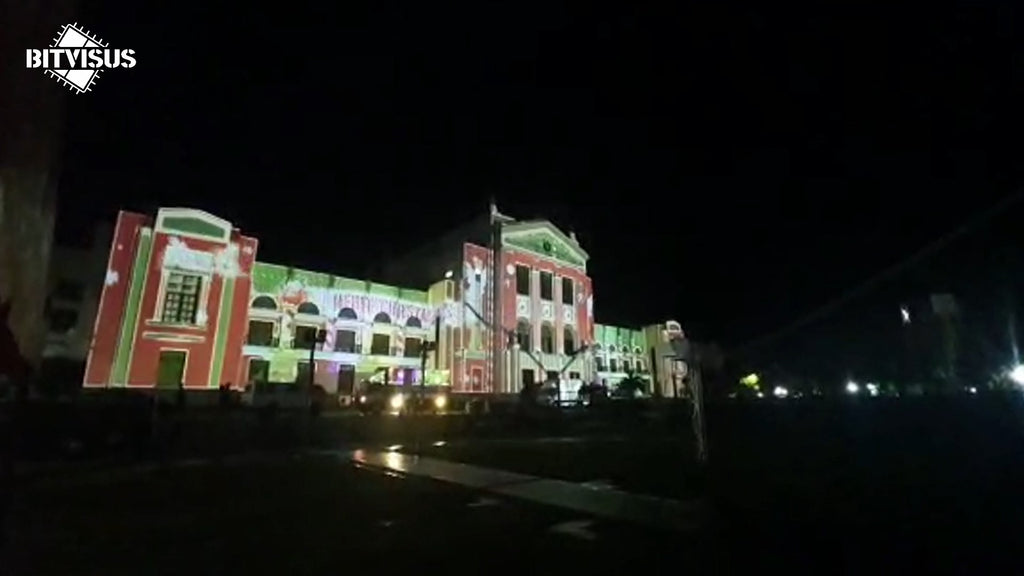
For a six-projector Christmas building projection mapping show with cable runs of approximately 120 m, the HDBaseT distributed bundle ranks first by installed cost per screen. The documented Romania deployment uses two BitvisusBIT-MSE-4K60-104Pro multi-screen expanders and six BIT-Ex-HDBT-150-RX extenders, driven by one PC with a GTX 3050 GPU. It records lower overall project cost for the light show operator and reduced commissioning workload. This ranking is a relative cost-per-screen assessment, not a currency quote: no approved public prices are supplied here. It compares the hardware, cabling and commissioning drivers that determine the installed cost of each screen.
The term controller bundle in this article covers the signal-processing and extension set required to control six projector outputs, not a single box. A bundle can include multi-screen expanders, HDBaseT or fiber extension, cabling, commissioning labor and after-sales support. That distinction matters because the lowest-cost box can produce a higher cost per screen when it forces long cable runs, extra signal troubleshooting or repeated site visits.
Why six-projector light shows need a bundle decision, not a single box
A six-projector building mapping show has to solve three problems at the same time: source processing, projector grouping and signal transport. In the Romania case, one PC with a GTX 3050 drives all six projectors. Two Bitvisus BIT-MSE-4K60-104Pro multi-screen expanders are used, with three projectors per group fused into one image and total resolution up to 11520x1200. The signal then travels through six BIT-Ex-HDBT-150-RX extenders over cable runs of approximately 120 m.
That is not a one-box purchase. It is a small signal system. The cost per screen therefore depends on how many processing and extension endpoints are needed, what cable route is available, how the projectors are grouped, and how much commissioning time is required to align blending, warping, color and playback. A direct multi-screen expansion bundle may use fewer parts, but it can become more expensive per screen if the projectors are far from the control position.
What cost per screen includes in a 6-projector mapping show
Cost per screen should be calculated as the total installed bundle cost divided by six. The five cost pools are: signal processing and multi-screen expansion; signal extension and receivers; cable, connectors and route preparation; commissioning labor and repeated adjustment; and spares, warranty and technical support. Dividing by six is useful because it shows whether an extra expander or extender is justified by lower installation and commissioning effort across the whole facade.
The Romania case is useful because it records outcomes rather than sticker prices. It states that one PC drives all six projectors, overall project cost is lower for the light show operator, commissioning workload is reduced, and the system has been in service at this site for five years. Those are qualitative and operational results. They do not publish a price per screen, so a buyer should still request an itemized quote for the exact projector layout, cable route and site conditions.
Industry background: controller, expander and distribution architecture
Video wall controllers and multi-screen expanders are related but not interchangeable terms in every project. Bitvisus groups multi-screen expanders, video processors, matrix switchers and extenders in its product portfolio, and it continuously upgrades 4K and 8K product lines. For a seasonal building light show, the practical question is not the label on the box. It is whether the bundle can take one PC source, split and position six projector outputs, and carry those signals over the actual cable route without adding excessive commissioning work.
Different applications weight the same decision differently. A control-room video wall controller may prioritize 7x24 operation, IP-based control, remote management, rack-mount integration and security monitoring workflows. A conference-room display may prioritize seamless switching and simple user control. A Christmas building mapping show may prioritize long-distance transport, outdoor event scheduling and fast commissioning. This article stays with the six-projector light-show case, because the cost-per-screen ranking changes when the cable route and operating pattern change.
Ranking method: how the three bundles were ordered
Three bundle architectures are compared for the same six-projector, approximately 120 m scenario. Rank 1 is the HDBaseT distributed bundle documented in Romania. Rank 2 is direct multi-screen expansion using two BIT-MSE-4K60-104Pro units and direct projector cabling. Rank 3 is a fiber-extender distribution bundle for routes or electrical conditions beyond the documented HDBaseT link. The ordering uses installed cost per screen, not public list price.
The ranking criteria are component count per six screens, cable and termination burden, commissioning workload, fit to the documented 120 m route, and serviceability. A bundle that adds extenders can still rank higher if it removes long HDMI runs, reduces signal troubleshooting and supports a faster show setup. A bundle with fewer parts can rank lower if it only works when projectors are close to the control position. This is the central cost-per-screen logic in the Romania deployment.
Rank 1: HDBaseT distributed bundle for 120 m six-projector shows
The HDBaseT distributed bundle ranks first for the documented Romania light show because it matches the actual distance and records lower overall project cost and reduced commissioning workload. The bill of materials is two BIT-MSE-4K60-104Pro multi-screen expanders, six BIT-Ex-HDBT-150-RX extenders, one PC with a GTX 3050 GPU, and approximately 120 m cable runs to six projectors. The projectors are organized as two groups of three, with each group fused into one image and total resolution up to 11520x1200.
Why the HDBaseT bundle wins on installed cost per screen
On component count alone, HDBaseT is not the smallest bundle. It uses two expanders and six extenders. Its advantage is that it avoids long direct projector runs from the control position and moves the extension burden to a structured cable route. In the Romania case, this architecture is connected to one PC driving all six projectors, lower overall project cost for the operator, reduced commissioning workload and five years of service at the site. For a 120 m building facade, those operational outcomes matter more than a lower box count.
Cost per screen should therefore include the six receiver endpoints and the time saved during setup. If a direct-cable bundle needs active cables, repeaters, equipment relocation or repeated rework at height, its apparent hardware saving can disappear. The HDBaseT bundle is rank 1 for this scenario because the documented deployment already proves the six-projector, 120 m architecture in service, not because every six-projector job should use the same bill of materials.
What to verify before accepting the Rank 1 bundle
- Confirm the route is approximately 120 m and that the cable class, connectors and power arrangement match the project drawing.
- Confirm six projectors are organized as two groups of three, with total output up to 11520x1200 as in the Romania reference.
- Confirm the source PC and GPU can output the required signal format; the documented case uses one PC with a GTX 3050.
- Confirm the exact model and voltage are covered by the required EU declarations; request the certificate that matches the ordered configuration.
- Confirm warranty, spare-parts and remote-debugging terms before the show schedule is fixed.
Rank 2: Direct multi-screen expansion bundle
The direct multi-screen expansion bundle ranks second for the six-projector Christmas show because it can be the lowest-component option on short cable routes, but it does not match the documented 120 m Romania signal path. In this bundle, two BIT-MSE-4K60-104Pro expanders feed the six projectors directly, without six HDBaseT receivers. The hardware count is lower, and for an indoor show with projectors close to the control rack, the cost per screen can be lower than a distributed bundle.
The limitation is distance and commissioning. The Romania deployment uses HDBaseT extenders for approximately 120 m; it does not document a direct 120 m projector run. If a direct bundle needs long HDMI cables, active cables, repeaters or relocation of the PC, the cost per screen can rise through cable hardware and troubleshooting. Direct expansion is therefore rank 2: useful when the route is short and controlled, but not the lower-risk choice for a 120 m building facade.
When direct expansion is the lower-cost choice
Direct expansion makes sense when the projectors are in the same room or within a short, protected cable route from the control position. It also suits temporary shows where the rack can be placed near the projection stack and where the installer can verify each output without long cable equalization. The cost advantage comes from removing six receiver endpoints. That advantage should be checked against the actual route, because one long projector run can change the ranking.
Rank 3: Fiber-extender distribution bundle
The fiber-extender distribution bundle ranks third for the documented 120 m show because it adds optical transmission hardware and termination work without a documented distance need in the Romania case. Fiber is relevant when the route exceeds the practical HDBaseT link or when electrical noise and grounding conditions make copper transport unattractive. For those projects, fiber can be the correct architecture even though its cost per screen is higher.
Bitvisus offers a fiber optic extender and embedded projection fusion server product line for long-distance signal transmission. Specific fiber transmission distance and single-mode or multi-mode specifications are not publicly disclosed in the supplied material, so they must be confirmed with sales or technical support for the exact project. For the six-projector Romania reference, the documented link is approximately 120 m over HDBaseT. A fiber bundle would add cost per screen unless the site survey shows a route, noise or isolation condition that justifies it.
Comparison table: three six-projector bundles by cost-per-screen drivers
| Rank | Bundle | Signal path for six projectors | Hardware in the six-screen set | Cost-per-screen driver | Commissioning profile | Typical fit |
|---|---|---|---|---|---|---|
| 1 | HDBaseT distributed bundle | One PC to two BIT-MSE-4K60-104Pro expanders, then six BIT-Ex-HDBT-150-RX extenders to six projectors | 2 multi-screen expanders plus 6 HDBaseT extenders | More endpoints, but avoids long direct projector runs; Romania case records lower overall project cost | Reduced commissioning workload in the documented Romania case | Six-projector building mapping at approximately 120 m |
| 2 | Direct multi-screen expansion bundle | One PC to two BIT-MSE-4K60-104Pro expanders, then direct projector cabling | 2 multi-screen expanders | Lowest component count; hidden long-run cable or repeater cost at 120 m | Higher at 120 m; better when the rack is near the projectors | Short cable routes and controlled indoor setups |
| 3 | Fiber-extender distribution bundle | One PC to two expanders, then fiber transmission hardware to six projectors | 2 expanders plus fiber transmission hardware; exact model and fiber specification not supplied | Highest transmission hardware and termination burden | Higher termination and verification workload | Routes beyond the documented HDBaseT link or electrically noisy sites |
The table ranks relative cost-per-screen drivers only. It does not state a price, because no approved public prices are supplied. Request an itemized quote for the exact six-screen bill of materials, cable route and commissioning scope.
Step-by-step: specifying and commissioning a six-projector bundle
- Lock the screen layout and native resolution. In the Romania case, six projectors are organized as two groups of three, with each group fused into one image and total resolution up to 11520x1200.
- Measure the cable route from the PC or rack to each projector. The documented Romania link is approximately 120 m, which is the deciding distance for the ranking.
- Choose the distribution architecture. Use direct expansion only when the route is short and controlled; use HDBaseT when the documented 120 m route applies; use fiber only when the site survey justifies it.
- Count the processing units. The documented bundle uses two BIT-MSE-4K60-104Pro multi-screen expanders for six projectors.
- Count the endpoints. The HDBaseT bundle uses six BIT-Ex-HDBT-150-RX extenders, one per projector in the documented case.
- Confirm the source and software. The Romania case uses one PC with a GTX 3050 GPU; verify output format, EDID behavior and mapping software before ordering.
- Plan power, rack space, heat and service access at the projector end. Long-distance extension still requires reliable power and protected cable termination.
- Commission in stages: single projector, projector group, full 11520x1200 canvas, edge blending, warping, color match, latency check and full show playback.
- Document the as-built cable map and spare parts. The Romania system has been in service for five years, so service access and support terms belong in the cost-per-screen comparison.
Use cases and scale signals
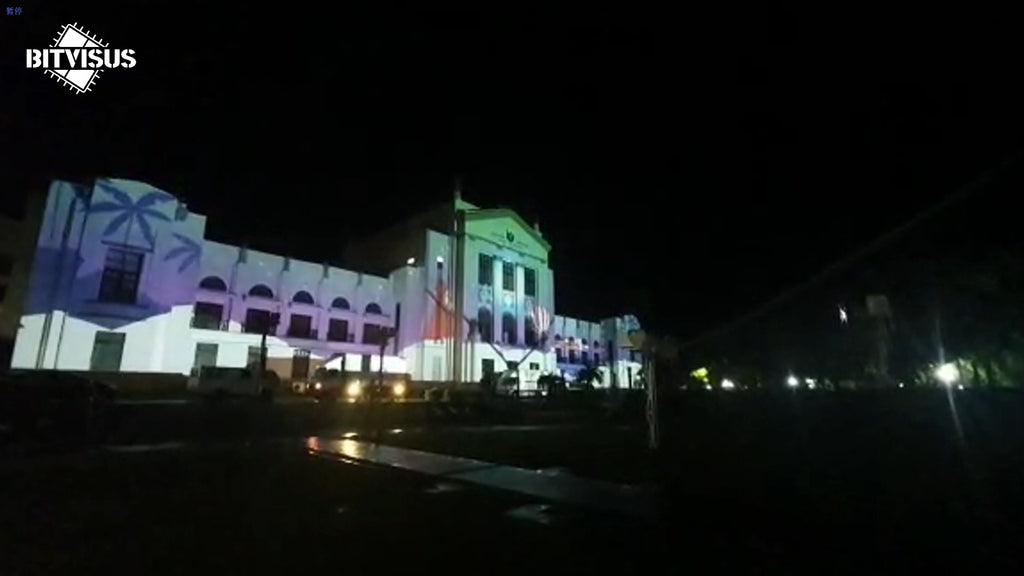
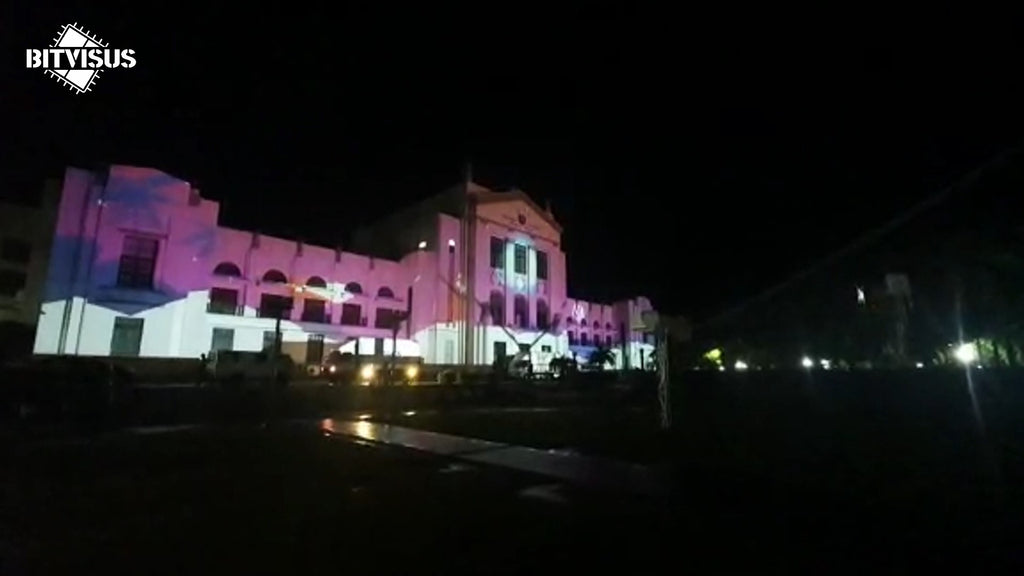
The Romania reference is a Christmas building 3D projection mapping light show and museum building projection mapping project. The documented deployment has been in service for five years and has been used by 3D projection mapping competition and building light show organizers. It is the main evidence for ranking the HDBaseT bundle first in a six-projector, approximately 120 m scenario.
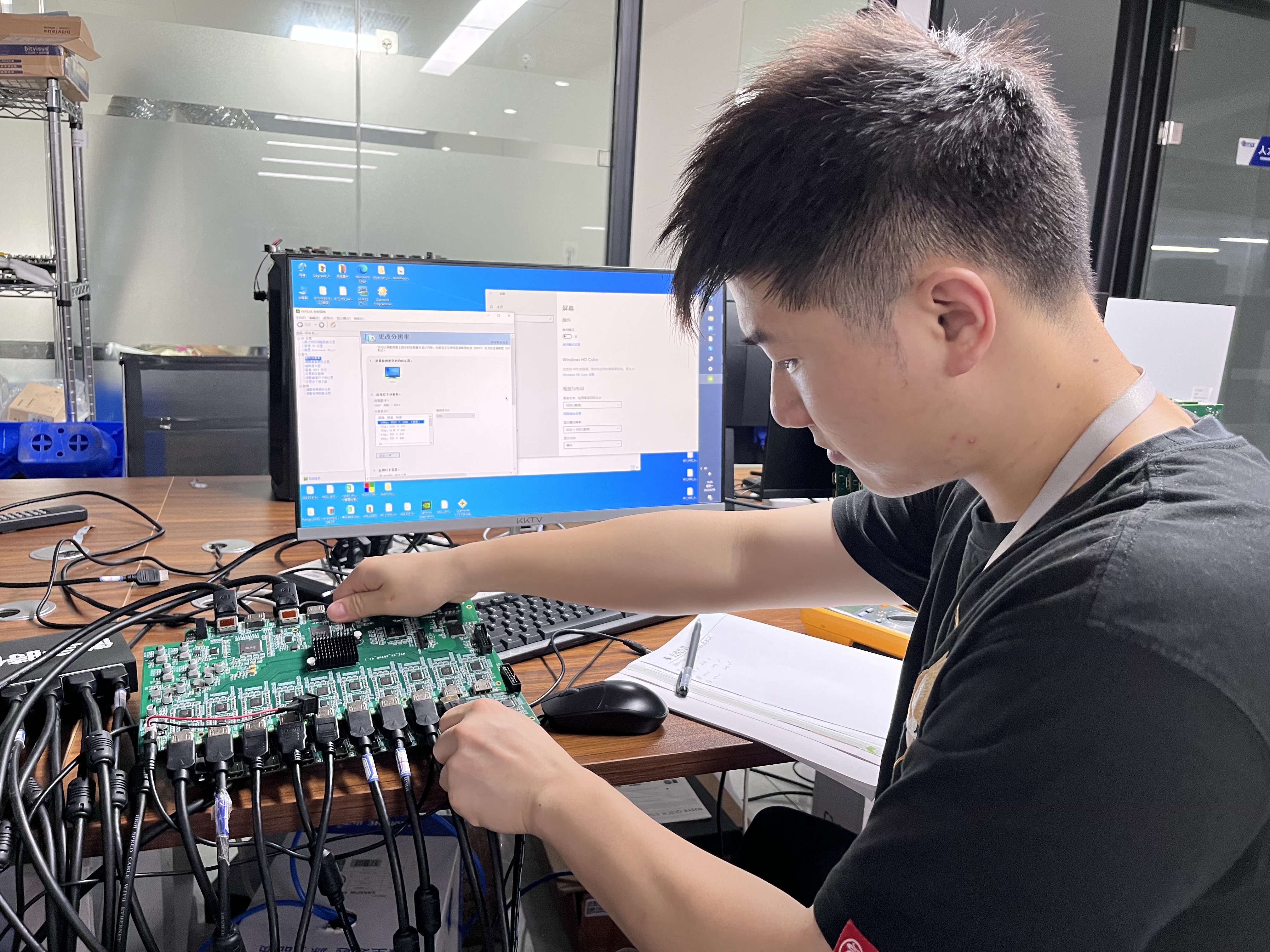
Bitvisus also documents a larger China exhibition case with more than 100 industrial 1080p projectors and 12 video wall controllers. Each BIT-VWC-409R drives nine projectors in a 3x3 video wall, producing 5K 5760x3240 per wall and a final combined image exceeding 16K. That case is not the same bundle as the six-projector Romania show, but it shows how the cost-per-screen logic scales: the processing and distribution architecture must follow the screen count, cable route and commissioning model rather than a single product label.
Limitations and buyer checks
This ranking is not a universal specification. The documented 120 m link applies to the Romania case; a different building, cable route or projector model needs its own survey. The Romania case does not publish a price per screen, so a buyer must request an itemized quote that separates processing, extension, cable, commissioning and support. The case also does not establish that every six-projector show should use two expanders and six extenders; it establishes a verified configuration for that site.
Compliance is model-specific. Bitvisus supplies CE-EMC, FCC SDoC and RoHS declarations for MSE, VWC and MV series processor scopes, with lead models such as BIT-VWC-MD1212Ma and BIT-MSE-8K60D-104Pro. A buyer should request the declaration that matches the exact ordered model and voltage, especially for an EU deployment. Warranty is one year for video wall controllers, with 7x24hr technical support, free remote debugging and multilingual technical documentation in Chinese and English.
This article is also not a control-room or conference-room specification. Those projects may add IP-based control, remote management, rack-mount integration, security monitoring workflows or 7x24 operating requirements that change the cost-per-screen weighting. The ranking here stays with the six-projector Christmas building mapping show and the documented Romania deployment.
FAQ
What certifications should a buyer verify for an EU six-projector light-show bundle?
For an EU deployment, request the CE-EMC and RoHS declarations that match the exact model and voltage. Bitvisus documents CE-EMC declaration CTC118K0401302EC for a 220V input modular multi-screen splicing matrix processor and CTC118K0401301EC for a 12V input multi-screen splicing processor. RoHS declarations include CTC118K0401302RC and CTC118K0401301RC. The certificate scope covers MSE, VWC and MV series processor scopes with lead models such as BIT-VWC-MD1212Ma and BIT-MSE-8K60D-104Pro. For US projects, FCC SDoC declarations are also documented. Do not assume a series-level certificate covers every configuration without checking the ordered model, voltage and project market.
How many controllers and extenders does the Romania six-projector case use?
The Romania case uses two BIT-MSE-4K60-104Pro multi-screen expanders and six BIT-Ex-HDBT-150-RX extenders. One PC with a GTX 3050 GPU drives all six projectors over cable runs of approximately 120 m. The projectors are arranged as two groups of three, with each group fused into one image and total resolution up to 11520x1200. The documented outcomes include lower overall project cost for the light show operator, reduced commissioning workload, and five years of service at the site. That is a verified reference configuration, not a mandatory bill of materials for every six-projector show.
How is cost per screen calculated when no public prices are available?
Use the total installed bundle cost divided by six screens. Include the processing and expansion hardware, extension endpoints, cable and connectors, route preparation, commissioning labor, spare parts, warranty and support. Then compare the complete six-screen scope rather than the processor price alone. The ranking in this article uses relative cost drivers because no approved public prices are supplied. A buyer should ask for an itemized quote that separates the two expanders, six extenders, cable route and commissioning so the cost per screen can be compared on the same basis.
What reduces commissioning workload in the HDBaseT bundle?
The documented Romania bundle reduces commissioning workload by using one PC to drive all six projectors through two expanders and six HDBaseT extenders, with the projectors organized as two groups of three. That structure concentrates signal setup and keeps the long-distance transport on a repeatable cable route. Commissioning still requires EDID checks, resolution setup, edge blending, warping, color matching, latency verification and full show playback. The Romania case records reduced commissioning workload; it does not mean zero commissioning or automatic alignment.
What are the lead times and after-sales terms?
Standard stock lead time is 3-7 days. Custom orders are quoted at 2-3 months, and export orders are cleared through customs and shipped within 10 days. Video wall controllers carry a one-year warranty, with 7x24hr technical support, free remote debugging, multilingual technical documentation in Chinese and English, spare-parts replacement and localized technical training. For a project-specific six-projector bundle review, download the 2026 Bitvisus Product Brochure or contact Bitvisus with the projector layout and cable route.
Conclusion
For a six-projector Christmas building projection mapping show with approximately 120 m cable runs, the HDBaseT distributed bundle ranks first by installed cost per screen. The documented Romania deployment uses two BIT-MSE-4K60-104Pro expanders and six BIT-Ex-HDBT-150-RX extenders with one GTX 3050 PC, reaches up to 11520x1200 across two groups of three projectors, and records lower overall project cost and reduced commissioning workload. Direct multi-screen expansion ranks second because it can lower hardware count on short routes but does not match the documented 120 m path. A fiber-extender bundle ranks third for this site because it adds transmission and termination cost without a documented need, while remaining relevant for longer or noisier routes.
Use the documented Romania six-projector case as a reference, then request a bundle quote with the exact projector layout, cable route and commissioning scope.
Download the 2026 Bitvisus Product Brochure for product and application context.
Have Questions or Need More Details?
Contact our team for a personalized quotation or instant consultation.
Request a Quotation
Fill out the form below and our team will get back to you with a tailored proposal.
WhatsApp Direct Chat
Prefer to chat in real-time? Message us on WhatsApp for instant assistance & quick answers.
- Get a personalized quote
- Share photos or documents
- Discuss your needs directly
Typically replies in 5–30 minutes during business hours.