
Video Wall Controller vs Multi-Screen Expander vs Fiber Extender: Which Fits Your Project?
Video Wall Controller vs Multi-Screen Expander vs Fiber Extender: Which Fits Your Project?
A video wall, a projection-mapped building facade and a six-projector 3D show are all described as multi-screen projects, yet they are built from three different device categories. A video wall controller routes, splices and composites sources onto a fixed display array. A multi-screen expander turns one high-resolution canvas into several tiled outputs aimed at projectors or panels. An HDBaseT or fiber extender moves an already-processed HDMI signal across a long cable run. Specifying the wrong category is one of the most expensive mistakes in AV procurement, because the error usually only becomes visible during commissioning.
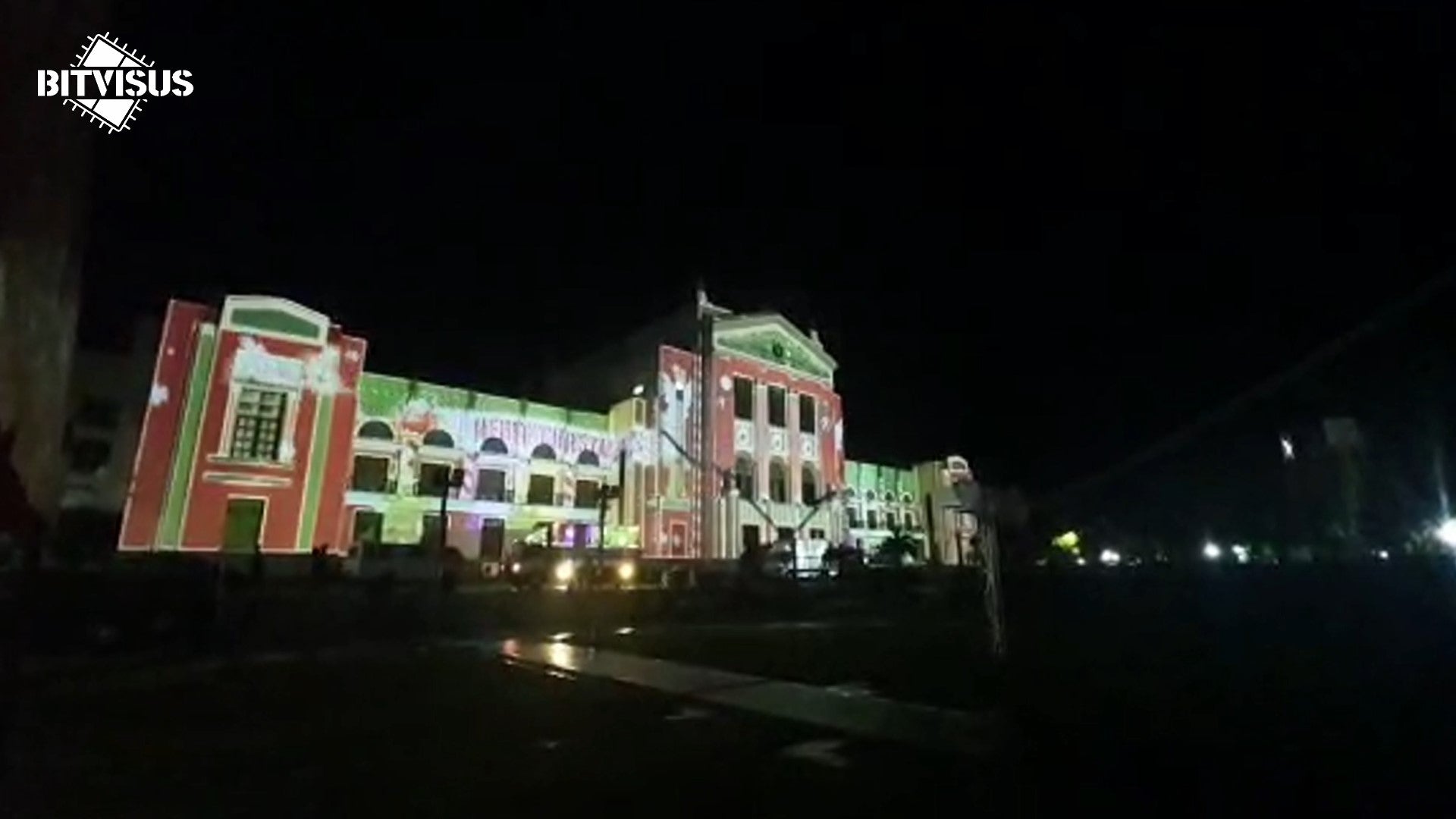
This guide separates the three roles, then tests the decision against two documented Bitvisus deployments: a Christmas 3D building projection mapping show in Romania, where a single PC drove six projectors across roughly 120 m of cable, and the Cezanne immersive art exhibition in Shenzhen, where twelve video wall controllers drove more than 100 industrial projectors.
Problem Definition: The Three Devices Solve Three Different Problems
The confusion starts with vocabulary. Vendors, integrators and end users often use video wall controller as a catch-all term for any box that puts an image on more than one screen. In practice, three questions determine which hardware you need:
- Do you need to choose between sources, or to split one source? Routing and seamless switching come from a controller or matrix; replicating a single oversized canvas comes from an expander.
- Do you need to change the picture, or only to move it? Splicing, windowing, rotation and layout handling are processing functions. Extenders do none of them.
- How far must the signal travel between the processing device and the display? A controller output is not designed to cross a long cable path; that is what an extender is for.
Answer those three questions honestly and the device category usually selects itself. Failures happen when a project assumes a multi-screen expander can switch between five laptops, or that a video wall controller with a 15 m output limit can reach a projector 120 m away.
Industry Background: Why Role Confusion Is Getting More Common
The video wall controller market is expanding quickly, and so is the variety of architectures sold into it. Dataintelo estimates the global video wall controllers market at approximately USD 2.25 billion in 2025, projected to reach USD 4.4 billion by 2034, a CAGR of 7.8% across 2025-2034. GCG Enterprise Solution, citing AVIXA, reports that AV-over-IP adoption reached 73% of new video wall controller installations in early 2026. More projects therefore combine local processing hardware with networked transport, and more buyers must decide where processing ends and transport begins.
Demand is also concentrated in a few demanding use cases. Statifacts attributes 50% of video wall processor market contribution to control room applications, which explains why low-latency processing, remote management and continuous reliability dominate specification discussions. At the same time, legacy hardware processors in 4U chassis lost 18% market share in 2025 as users shifted toward AV-over-IP and software orchestration - a reminder that more hardware is not automatically the better answer.
Two practical consequences follow. First, more projects now mix controllers, expanders and extenders inside one signal chain, so the interfaces between them must be planned rather than improvised. Second, because these device types are frequently imported under a single customs classification (HS code 85437099, other electrical machines and apparatus), buyers cannot rely on tariff codes alone to confirm what a product actually does; they have to read the specification sheet.
Control rooms add an ergonomics dimension as well: ISO 11064 is the primary international standard governing control-room ergonomics, and it influences how operators need to see, switch and manage video wall content - not only how many pixels a processor can push.
Detailed Solution: What a Video Wall Controller, Multi-Screen Expander and Extender Each Do
The cleanest way to compare the three categories is to assign each one a job in the signal chain, then verify that job against real hardware specifications. The examples below are Bitvisus models documented in live deployments.
Role 1 - Video Wall Controller: Routing, Splicing and Window Layout
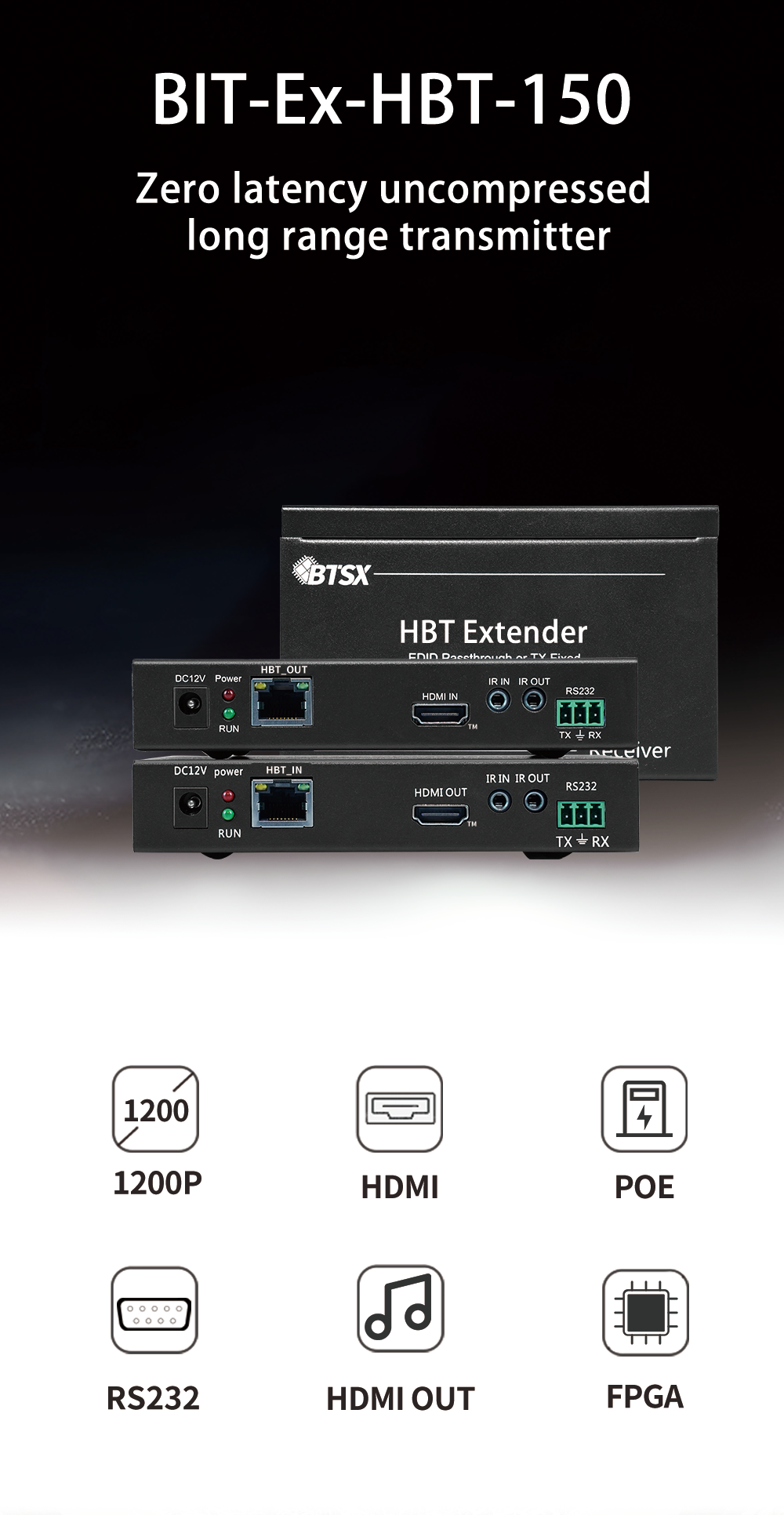
A video wall controller owns the walls. It accepts multiple sources, decides which source appears where, and outputs one signal per display in the array. The BIT-VWC-409R is a documented example: it accepts five input channels - three HDMI 1.4, one HDMI 2.0 and one DP 1.2 (cable length 5 m or less) - with HDCP 2.2 support, and provides nine HDMI 1.3 outputs (cable length 15 m or less) plus one DP 1.2 loop-out. A single unit therefore delivers 5 inputs and 9 outputs and is compatible with a 1-input/9-output configuration.
Its processing set is what separates it from a splitter. Output resolution is 1920x1080 at 60 Hz; input support reaches 3840x2160 at 60 Hz with backward compatibility; the stitching mode covers splicing within 9 screens; and up to four signals can be sent to the wall at the same time, with left/right, top/bottom, four-split and picture-in-picture modes. Input rotation of 90 degrees and first-row output rotation of 180 degrees support portrait and inverted-row layouts. Control is available through infrared remote control, RS232 serial port and PC host software, with DHCP support and power-down memory. Power consumption is 12 W from a DC 12 V 2 A supply, and the unit measures 270 mm x 122.5 mm x 20.5 mm at 1 kg, with a one-year warranty.
For larger walls the same role scales through a card-based chassis. The BIT-VWC-MD3636Ma is a 4K60 seamless matrix splicer in a 7U chassis supporting up to 9 input and 9 output boards, a maximum of 36 HDMI 2.0 inputs and 36 HDMI 2.0 outputs, and combinations such as 4-in/36-out, 12-in/36-out and 36-in/36-out. Input-to-output latency is below 40 ms, output-port synchronization difference is 0 ns (excluding differences introduced by the display), and control is available through RS232, web interface, button board, remote control and a web API.
Role 2 - Multi-Screen Expander: High-Resolution Tiling for Projectors
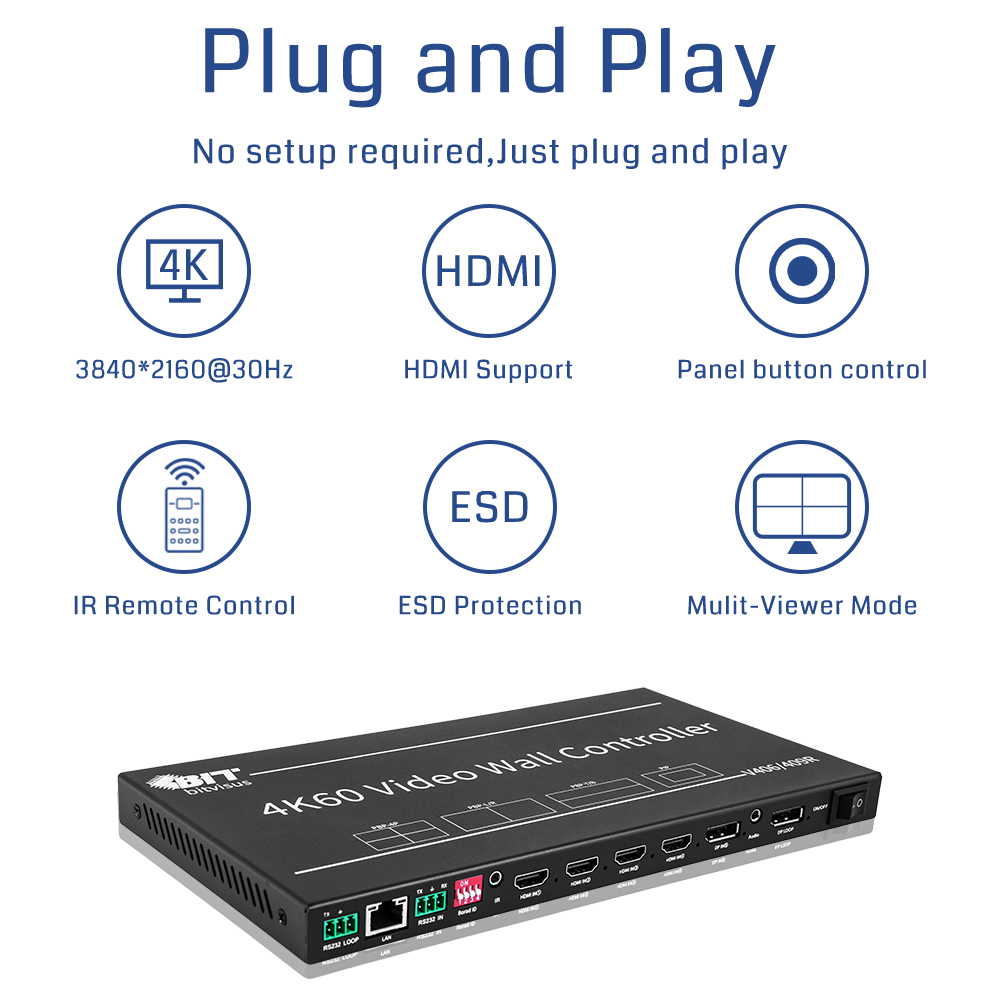
A multi-screen expander starts from a single high-resolution canvas and physically tiles it across several outputs - the standard building block for projection fusion, wide panoramas and 1xN or MxN arrays where one image must not be stretched or duplicated. The BIT-MSE-4K60-104Pro takes one HDMI or DP input (HDMI has priority) with HDCP 2.2 and provides four HDMI outputs. It supports 1xN, Nx1, MxN and 90-degree rotation splicing ratios without stretching or deformation. Output support reaches 4x1920x1200@60Hz, with 2x2 up to 3840x2400@60Hz, 3x1 or 1x3 up to 1920x3600@60Hz or 5760x1200@60Hz, and 4x1 or 1x4 up to 1920x4800@60Hz or 7680x1200@60Hz.
Two specification details matter in the field. Output distance is 15 m, which tells the installer how much cable slack the design can absorb before extenders become necessary. And EDID can be modified through the USB interface, which is how the device is matched to non-standard projector or panel timing. The unit supports parallel operation to extend display scale, uses a 12V@2A AC-DC supply, and carries a one-year warranty.
This is also the device at the centre of the Romania deployment described later - evidence that this category, not a controller, is usually the correct choice when a single PC must feed a wide projection canvas.
Role 3 - HDBaseT / Fiber Extender: Distance, Not Processing
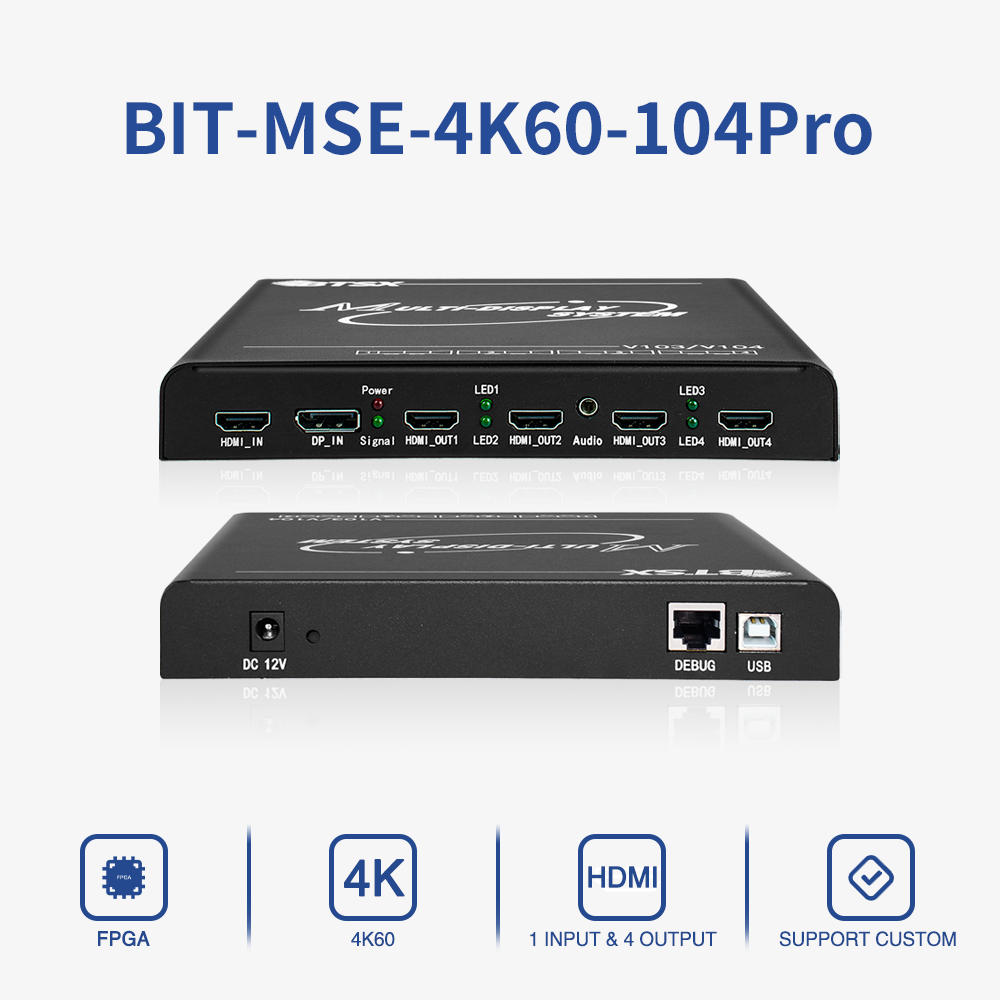
An extender pair does one job: it takes an HDMI signal that has already been produced and delivers it, unchanged in structure, to a display at a distance the source or processor cannot reach. The BIT-Ex-HDBT-150 is a transmitter and receiver pair in a metal chassis. The transmitter accepts HDMI 1.4 (5 m or less), IR and RS232; the receiver accepts CAT6E cable runs up to 150 m; the receiver then outputs HDMI 1.4 (5 m or less), IR and RS232. Transmission distance is specified as 1080p over CAT6E at 150 m, with 1200P@60Hz resolution and downward compatibility, a full-digital pixel bandwidth of 165 MHz / 300 MHz, and a transmission bandwidth of 6 Gbps.
Control and power behaviour make it practical for installed systems: two-way RS232 transparent transmission, two-way IR transparent transmission, CEC, and a USB-KVM function with two USB ports for a mouse and keyboard. POE supply is unidirectional, so only one device in the pair needs a 12 V feed. The fanless design holds power dissipation to 12 W or less, the net weight is about 0.5 kg, HDMI 1.4 and HDCP 2.2 are supported with compatibility for DVI 1.0 and VGA, and the structural configuration supports OEM customization.
What an extender cannot do is equally important: it does not splice, scale, rotate or window. If the picture reaching the extender is wrong, the picture arriving at the projector will be wrong at 150 m as well.
Step-by-Step Breakdown: Six Decisions That Determine the Fit
The following sequence reflects how the two documented deployments were actually scoped. Work through it in order; each answer narrows the hardware category.
Step 1 - Count the displays and the tiles
Nine projectors in a 3x3 array can be driven by one controller with nine outputs, as in the Shenzhen case. Four projectors fed by one high-resolution canvas point to a multi-screen expander with four outputs. Thirty-six screens with arbitrary source assignment point to a modular matrix splicer such as BIT-VWC-MD3636Ma.
Step 2 - Decide whether you are switching sources or splitting one image
Multiple laptops, cameras or players that must appear on the same wall require a controller or matrix. A single PC whose output must be divided point-to-point across several projectors requires an expander.
Step 3 - Measure the real cable path
Compare the processing device output distance with the actual route. BIT-VWC-409R outputs are specified at 15 m or less, BIT-MSE-4K60-104Pro output distance is 15 m, and BIT-VWC-8K60Y-115Pro supports HDMI 1.4 output cable lengths up to 15 m. Where the route is longer - the Romania project needed roughly 120 m - an HDBaseT extender pair such as BIT-Ex-HDBT-150, specified to 150 m over CAT6E for 1080p, is the correct insertion.
Step 4 - Confirm resolution, scaling and blending needs
Expander tiling supports defined combined canvases (for example 5760x1200@60Hz in 3x1, or 7680x1200@60Hz in 4x1 on BIT-MSE-4K60-104Pro). Controllers define what each individual screen receives (for example 1920x1080@60Hz on BIT-VWC-409R, or up to 3840x2160@60Hz output on BIT-VWC-8K60-404Max). Edge blending and warping are applied downstream in projection fusion work and were part of both documented deployments.
Step 5 - Plan the layout rules
Portrait walls, inverted first rows and irregular mixes need explicit support. BIT-VWC-409R handles 90-degree input rotation and 180-degree first-row output rotation; BIT-VWC-MD3636Ma supports layouts such as 6x6, 1x36 and 2x2+4x4+2x2+2x6; BIT-VWC-8K60Y-115Pro supports MxN point-to-point splicing where M and N are each 15 or less and MxN is 15 or less, plus first-row 180-degree rotation for inverted screens.
Step 6 - Match control, management and compliance to the site
Control interfaces determine daily usability and remote support. Documented options include RS232, IR, PC host software, Ethernet web interface, DIP switch and open web API. BIT-VWC-8K60-404Max and BIT-VWC-8K60Y-115Pro also support network wake-up and software-controlled power on/off, which matters for unmanned venues. Compliance documentation should be confirmed in parallel - see the next section.
Compliance Note: Certificates to Verify Before an EU or US Order
For constraint-driven purchasing, certification is often the item that stops a purchase order. Bitvisus publishes three declaration types for its controller and processor lines.
- CE-EMC (EU): Declaration of Conformity certificate CTC118K0401302EC under EMC Directive 2014/30/EU, listing EN 55032:2015/A11:2020, EN 55035:2017/A11:2020, EN IEC 61000-3-2:2019/A2:2024 and EN 61000-3-3:2013/A2:2021/AC:2022.
- RoHS (EU): Declaration of Conformity certificate CTC118K0401302RC under Directive (EU) 2015/863 as amended by Directive (EU) 2017/2102, with EN IEC 63000:2018 and IEC 62321 series test methods.
- FCC SDoC (US): Supplier's Declaration of Conformity certificate CTC118K0401302FC under ECFR Title 47 FCC Part 15 Subpart B:2024, following FCC rules 2.906, 2.908 and 2.909, with OMA Electronic Technology Inc as the US Responsible Party.
All three were issued by Shenzhen Circle Testing Certification Co., Ltd. on 2026-05-11 and are valid through 2099-01-01. One detail deserves attention: the declared scope covers the Modular Multi-screen Splicing Matrix Processor with 220 V input for the MSE/VWC/MV series, with lead model BIT-VWC-MD1212Ma, and the covered models include BIT-VWC-MD3636Ma and BIT-VWC-8K60-404Max. A separate CE-EMC Declaration, certificate CTC118K0401301EC, covers the 12 V input series including BIT-MSE-8K60D-104Pro, BIT-MSE-8K60Y-104Pro, BIT-VWC-8K60Y-115Pro and BIT-VWC-218Pro. RoHS documentation under CTC118K0401301RC covers the 12 V input series with lead model BIT-MSE-8K60D-104Pro, and FCC documentation covers BIT-MSE-8K60D-104Pro (CTC118K0401301FC) as well as BIT-MSE-8K60Y-104Pro, BIT-VWC-8K60Y-115Pro and BIT-VWC-218Pro. Buyers should confirm that the exact model on the purchase order appears within the declared scope rather than assuming series-level coverage.
Use Cases: Two Documented Deployments
Romania: one PC, six projectors, roughly 120 m
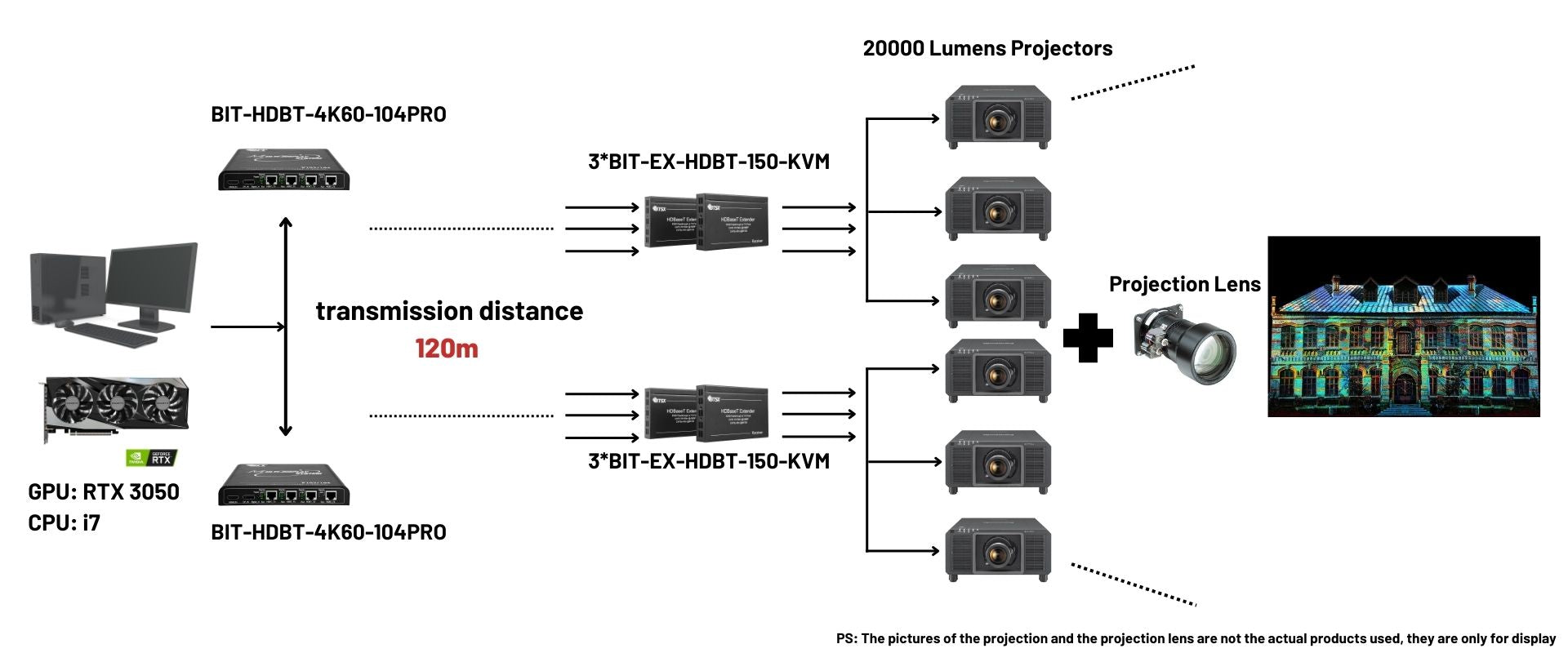
A Christmas 3D projection mapping light show on a museum building used one PC with a GTX 3050 GPU, two BIT-MSE-4K60-104Pro multi-screen expanders and six BIT-Ex-HDBT-150-RX extenders. Six projectors were driven from that single PC, with three projectors per group fused into one image, producing a total resolution of up to 11520x1200. Transmission distance was approximately 120 m. A second documented use of the same architecture is building facade projection mapping for cultural events. The reported outcome was a substantial reduction in commissioning workload and project cost compared with using multiple source machines.
Read the architecture carefully: the expanders performed the tiling, the extenders performed the distance, and no video wall controller appears in the equipment list. That is the decision the project actually made.
Shenzhen: 12 controllers, more than 100 projectors
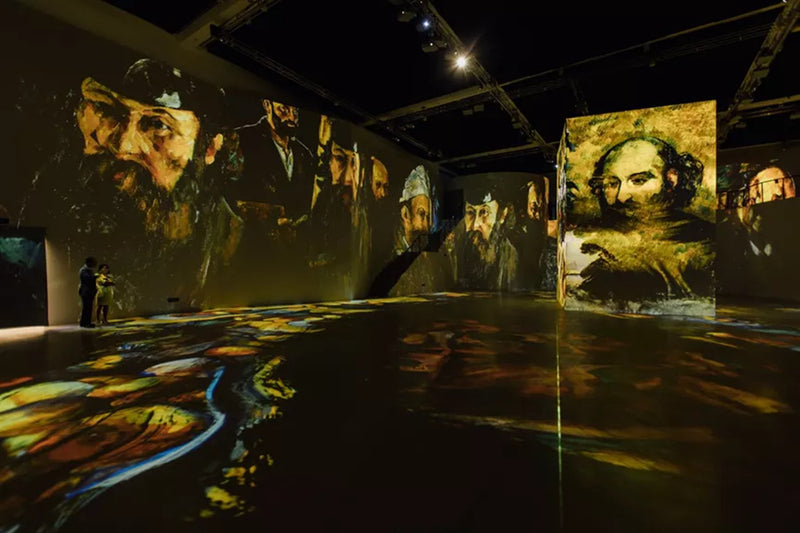
The Cezanne immersive painting art exhibition in Shenzhen used more than 100 industrial-grade 1080p projectors and twelve Bitvisus video wall controllers. Each BIT-VWC-409R drove nine projectors in a 3x3 video wall, with each 3x3 wall delivering 5K 5760x3240 display; multiple 3x3 walls were then recombined for a final image exceeding 16K. Edge blending and warping software ensured seamless images, and the configuration was scalable across resolutions and layouts.
Here the controller role dominates, because the requirement was structured assignment of sources and screens across many fixed arrays - not a single canvas tiled across a handful of projectors.
Comparison Table: Three Device Roles Side by Side
| Decision dimension | Video wall controller (BIT-VWC-409R / BIT-VWC-MD3636Ma) | Multi-screen expander (BIT-MSE-4K60-104Pro) | HDBaseT extender (BIT-Ex-HDBT-150) |
|---|---|---|---|
| Primary job | Source routing, splicing, window layout and screen assignment | Splitting one high-resolution canvas into tiled outputs | Carrying an already-processed HDMI signal over distance |
| Typical inputs | 409R: 3x HDMI 1.4, 1x HDMI 2.0, 1x DP 1.2 (5 m or less). MD3636Ma: up to 36 HDMI 2.0 | 1x HDMI or 1x DP (HDMI priority), HDCP 2.2 | TX: HDMI 1.4 (5 m or less), IR, RS232 |
| Typical outputs | 409R: 9x HDMI 1.3 (15 m or less) plus 1x DP loop out. MD3636Ma: up to 36 HDMI 2.0 | 4x HDMI, output distance 15 m | RX: HDMI 1.4 (5 m or less), IR, RS232, fed by CAT6E up to 150 m |
| Output resolution | 409R: 1920x1080@60Hz. MD3636Ma: up to 3840x2160@60Hz | 4x1920x1200@60Hz; 2x2 up to 3840x2400@60Hz; 4x1 up to 7680x1200@60Hz | 1200P@60Hz, downward compatible; 1080p at 150 m over CAT6E |
| Distance handling | Output specified to 15 m; longer runs require extenders | Output distance 15 m | The distance layer: 150 m over CAT6E |
| Scaling and layout features | Splicing within 9 screens, up to 4 signals on the wall, PIP, 90-degree input rotation, 180-degree first-row rotation; layouts such as 6x6 and 1x36 | 1xN, Nx1, MxN and 90-degree rotation splicing without stretch; EDID editable via USB | Transport only; CEC, two-way RS232/IR, USB-KVM passthrough |
| Control and management | IR remote, RS232, PC host software, web interface, web API, DHCP, power-down memory | EDID management via USB; parallel operation of multiple units | Two-way RS232/IR transparent transmission; unidirectional POE; OEM customization supported |
| Typical project fit | Control rooms, security monitoring walls, conference room walls, multi-source arrays | Projection fusion, wide panoramas, 1xN projector tiling | Any long cable path between processor and display |
Decision rule of thumb: if the requirement changes which picture appears, you need a controller. If it changes how one picture is divided, you need an expander. If it only changes where the picture has to arrive, you need an extender.
FAQ
Which certifications should we verify for a video wall controller project in the EU or US?
Three declaration types are documented for Bitvisus controller and processor lines: a CE-EMC Declaration of Conformity (certificate CTC118K0401302EC, EMC Directive 2014/30/EU, standards EN 55032:2015/A11:2020, EN 55035:2017/A11:2020, EN IEC 61000-3-2:2019/A2:2024 and EN 61000-3-3:2013/A2:2021/AC:2022), a RoHS Declaration of Conformity (certificate CTC118K0401302RC, Directive (EU) 2015/863 as amended by Directive (EU) 2017/2102, standard EN IEC 63000:2018), and an FCC Supplier's Declaration of Conformity for the US market (certificate CTC118K0401302FC, ECFR Title 47 FCC Part 15 Subpart B:2024, following FCC rules 2.906, 2.908 and 2.909, with OMA Electronic Technology Inc as the US Responsible Party). All three were issued by Shenzhen Circle Testing Certification Co., Ltd. on 2026-05-11 and are valid through 2099-01-01. The declared scope covers the 220 V input Modular Multi-screen Splicing Matrix Processor of the MSE/VWC/MV series with lead model BIT-VWC-MD1212Ma, covering models such as BIT-VWC-MD3636Ma and BIT-VWC-8K60-404Max, so confirm that the exact model on your order is inside the declared scope before release.
4K video wall controller manufacturers with multiple HDMI inputs - what should a buyer check?
Check channel count, card configurability and the declared input-output combinations. BIT-VWC-MD3636Ma is a 4K60 seamless matrix splicer in a 7U chassis with up to 9 input and 9 output boards, supporting up to 36 HDMI 2.0 inputs and 36 HDMI 2.0 outputs, configurable as 4-in/36-out, 12-in/36-out, 24-in/24-out or 36-in/36-out, with input-to-output latency below 40 ms. BIT-VWC-218Pro provides 2x HDMI 2.0 and 2x DP 1.2 inputs with 18x HDMI 1.3 outputs and a maximum input resolution of 4096x2160P60. BIT-VWC-409R provides five input channels (3x HDMI 1.4, 1x HDMI 2.0, 1x DP 1.2) and nine HDMI 1.3 outputs. Also verify frame rate and HDCP: BIT-VWC-MD3636Ma inputs and outputs run at 600 MHz pixel clock with HDCP support on HDMI 2.0 cards, and BIT-VWC-409R supports HDCP 2.2 on its inputs.
Can a multi-screen expander or an extender replace a video wall controller?
No, because the functions do not overlap. The BIT-MSE-4K60-104Pro expander tiled a single PC canvas across four HDMI outputs (per the Romania deployment, two units together fed six projectors), but it does not switch between independent sources or provide screen-wide windowing. The BIT-Ex-HDBT-150 extender pair moves HDMI 1.4 signals up to 150 m over CAT6E with two-way RS232 and IR, but performs no splicing, scaling or rotation. Where a project must assign several sources across many fixed screens - as in the Shenzhen exhibition, where twelve BIT-VWC-409R controllers each drove nine projectors in a 3x3 wall - a video wall controller or matrix splicer is required.
What minimum order quantity and lead time apply to a Bitvisus controller or expander?
The documented commercial terms are: standard models from 1 unit minimum order quantity, OEM private label from 10 units, and custom development from 100 units. Lead times are 3-7 days for standard stock, 2-3 months for custom orders, and customs clearance and shipment within 10 days for export orders. Monthly production capacity is 8,000 units, and quality control uses a three-level system covering 100% inspection of core components at incoming, single-board function testing at semi-finished stage, and a 7x24 hour full-channel power aging test before shipment.
How do we validate a configuration before committing to full deployment?
Start with a sample order of the standard model - the 1-unit minimum order permits this without a tooling commitment - and validate it against your own sources, displays and cable runs. Every unit carries a one-year warranty, 7x24 technical support, multilingual (CN/EN) technical documentation, free remote debugging and fast spare parts replacement. To confirm which combination fits your project, send the screen count, cable distances, source list and target market to eddie.jia@bitvisus.com or WhatsApp +86 186-8150-9089, and request a configuration review with a sample quotation.
Conclusion
Three device categories, three jobs, one signal chain. A video wall controller decides which source appears on which screen and how the array is composed; a multi-screen expander divides one high-resolution canvas into tiled outputs for projectors or panels; an HDBaseT or fiber extender carries an already-processed signal across the distance the processor cannot cover. The Romania project chose expanders plus extenders and reached six projectors from one PC across roughly 120 m at up to 11520x1200. The Shenzhen Cezanne exhibition chose twelve BIT-VWC-409R controllers and reached more than 100 projectors, with each 3x3 wall at 5760x3240 and a recombined image beyond 16K. Neither project was wrong; they were solving different problems.
To specify correctly, work the sequence in this order: count screens and tiles, decide between switching and splitting, measure the real cable path, confirm resolution and blending requirements, verify layout and control rules, and match the certification scope to the exact model you intend to buy. Grounding the decision in documented deployments - rather than in the broadest device category available - is what keeps commissioning predictable.
Next Step: Validate the Configuration Before You Buy
Shenzhen Bitvisus Technology Ltd. is a national high-tech manufacturer of 4K/8K video processing hardware, producing video wall controllers, multi-screen expanders, projector fusion processors, HDMI matrix switchers and network and fiber extenders from a 2,000 square metre workshop with an annual output of 100,000 units; 70% of production is exported to EU and USA markets.
Send your screen count, cable distances, source list and destination market to eddie.jia@bitvisus.com or WhatsApp +86 186-8150-9089 for a configuration review, sample quotation or OEM/ODM discussion. Download the 2026 Bitvisus Product Brochure (PDF) for full model specifications, or visit bitvisus.com.
Have Questions or Need More Details?
Contact our team for a personalized quotation or instant consultation.
Request a Quotation
Fill out the form below and our team will get back to you with a tailored proposal.
WhatsApp Direct Chat
Prefer to chat in real-time? Message us on WhatsApp for instant assistance & quick answers.
- Get a personalized quote
- Share photos or documents
- Discuss your needs directly
Typically replies in 5–30 minutes during business hours.