
Video Wall Controller Scenario: Christmas Building Mapping at 120 m with Six Projectors
Answer first: In the Romania museum/Christmas building 3D projection mapping deployment, one PC with a GTX 3050 GPU drove six projectors across approximately 120 m of cabling. The signal path used two BIT-MSE-4K60-104Pro multi-screen expanders and six BIT-Ex-HDBT-150-RX extenders for HDBaseT long-distance distribution. This case shows how a video wall controller architecture can be built with expanders and HDBaseT extenders when a project needs one-PC control, 4K source processing, multi-projector edge blending, and long cable runs. The deployment reported lower overall project cost for the light show operator and reduced commissioning workload.
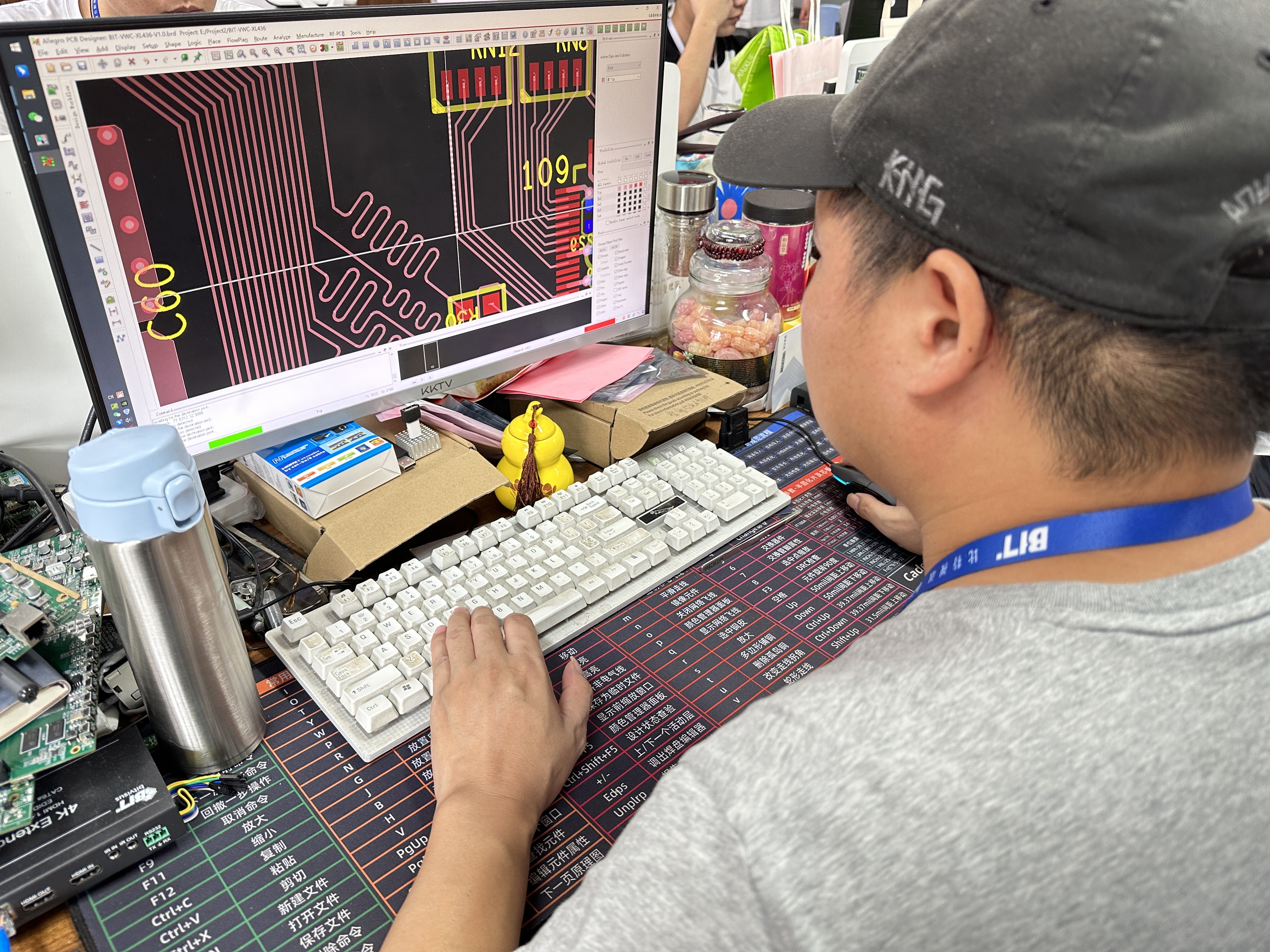
Bitvisus testing lab: every unit undergoes a 48-hour aging test before delivery.
Bitvisus is a Shenzhen-based manufacturer of 4K/8K video processing equipment, including video wall controllers, multi-screen expanders, and extenders. The company was founded in 2018 and operates a 2,000 m² factory with 100 employees, exporting about 70% of its output to the EU and USA. Its product range covers multi-screen expanders, projector fusion processors, video processors, HDMI matrices, multi-viewers, and network and fiber extenders.
Problem Definition
The Romania project was not a standard indoor video wall. It was a building-scale Christmas 3D projection mapping show on a museum building, with six projectors aimed at a facade and a single PC acting as the source. The project required a combined canvas of 11,520 × 1,200, high-resolution edge blending and warping, and signal distribution from one PC to all six projectors. The working distance was approximately 120 m, which made direct short-run cabling impractical for a clean and reliable installation.
The operator needed a signal chain that could do four things at once: preserve a 4K source from the PC, split and route the image to six projector paths, carry the signal over long distance, and support multi-projector edge blending and warping during commissioning. The project also had a commercial constraint: the light show operator needed to control overall project cost while reducing the commissioning workload for a time-limited Christmas season schedule.
This is where the decision between a centralized video wall controller chassis and a distributed expander-plus-extender architecture becomes important. In this deployment, the project used two BIT-MSE-4K60-104Pro multi-screen expanders and six BIT-Ex-HDBT-150-RX extenders. The expanders handled multi-screen signal distribution close to the source, while the HDBaseT extenders carried the signal over approximately 120 m to the projector positions.
Industry Background
Building projection mapping and immersive light shows are part of the broader professional AV display market. According to Dataintelo, the global video wall controllers market was estimated at approximately USD 2.25 billion in 2025 and is projected to reach USD 4.4 billion by 2034. The same source reports a CAGR of 7.8% from 2025 to 2034. These figures describe the overall market, not a single project, but they explain why buyers continue to compare video wall controllers, multi-screen expanders, and AV-over-IP approaches for large display work.
According to GCG Enterprise Solution / AVIXA, AV-over-IP adoption reached 73% of new video wall controller installations in early 2026. That does not mean every projection mapping project should be IP-based. For a Christmas building mapping project with a fixed six-projector layout, a deterministic baseband signal chain can be easier to commission and validate. The Romania case illustrates that point: the operator used a compact expander-and-extender chain rather than rebuilding the source and network architecture.
Control room applications also account for 50% of the video wall processor market contribution, according to Statifacts. That matters because the same buyer often evaluates a video wall controller for control room, a video wall controller for security monitoring, and a video wall controller for conference room use in parallel. Each use case has different priorities. A control room may prioritize rack-mount video wall controller design, low-latency video wall controller performance, and video wall controller with remote management. A building mapping project may prioritize long-distance distribution, edge blending, and one-PC operation.
For import and compliance planning, video wall controllers are commonly classified under HS Code 85437099 (other electrical machines and apparatus) or 85437042 (other video control unit). For control-room ergonomics, ISO 11064 is the primary international standard governing control-room layout management. For an outdoor Christmas mapping project, local electrical, EMC, and event safety requirements should be confirmed with the integrator and customs broker.
Detailed Solution: Expanders and HDBaseT Extenders in the Romania Deployment
The Romania deployment used a distributed signal distribution model. A single PC with a GTX 3050 GPU served as the source. Two BIT-MSE-4K60-104Pro multi-screen expanders were used to distribute the 4K source across the projector paths. Six BIT-Ex-HDBT-150-RX extenders then carried the signal over HDBaseT to the six projector locations across approximately 120 m of cabling.
The architecture separates three jobs that are often bundled into one controller chassis: source processing, multi-screen splitting, and long-distance transmission. The PC and mapping software create the 11,520 × 1,200 canvas. The multi-screen expanders organize the signal for the projector array. The HDBaseT extenders handle the 120 m runs. Edge blending and warping are configured across the projector array with the mapping software and projector alignment, while the expanders and extenders preserve the signal path from the single PC to each projector.
Decision rule from the case: When a project uses one PC, six projectors, and approximately 120 m of cable runs, a distributed expander-plus-HDBaseT-extender chain can be a practical alternative to a single centralized video wall controller chassis. The trade-off is that the design must be documented clearly so that source settings, expander mapping, extender placement, and projector blending are commissioned as one system.
The reported benefits for the light show operator were lower overall project cost and reduced commissioning workload. The cost benefit comes from matching the hardware to the actual signal path instead of over-specifying a large centralized controller. The commissioning benefit comes from placing extenders close to the projectors and keeping the source-side expander configuration compact. For a Christmas show with a fixed opening date, fewer installation steps and a simpler signal chain can reduce schedule risk.
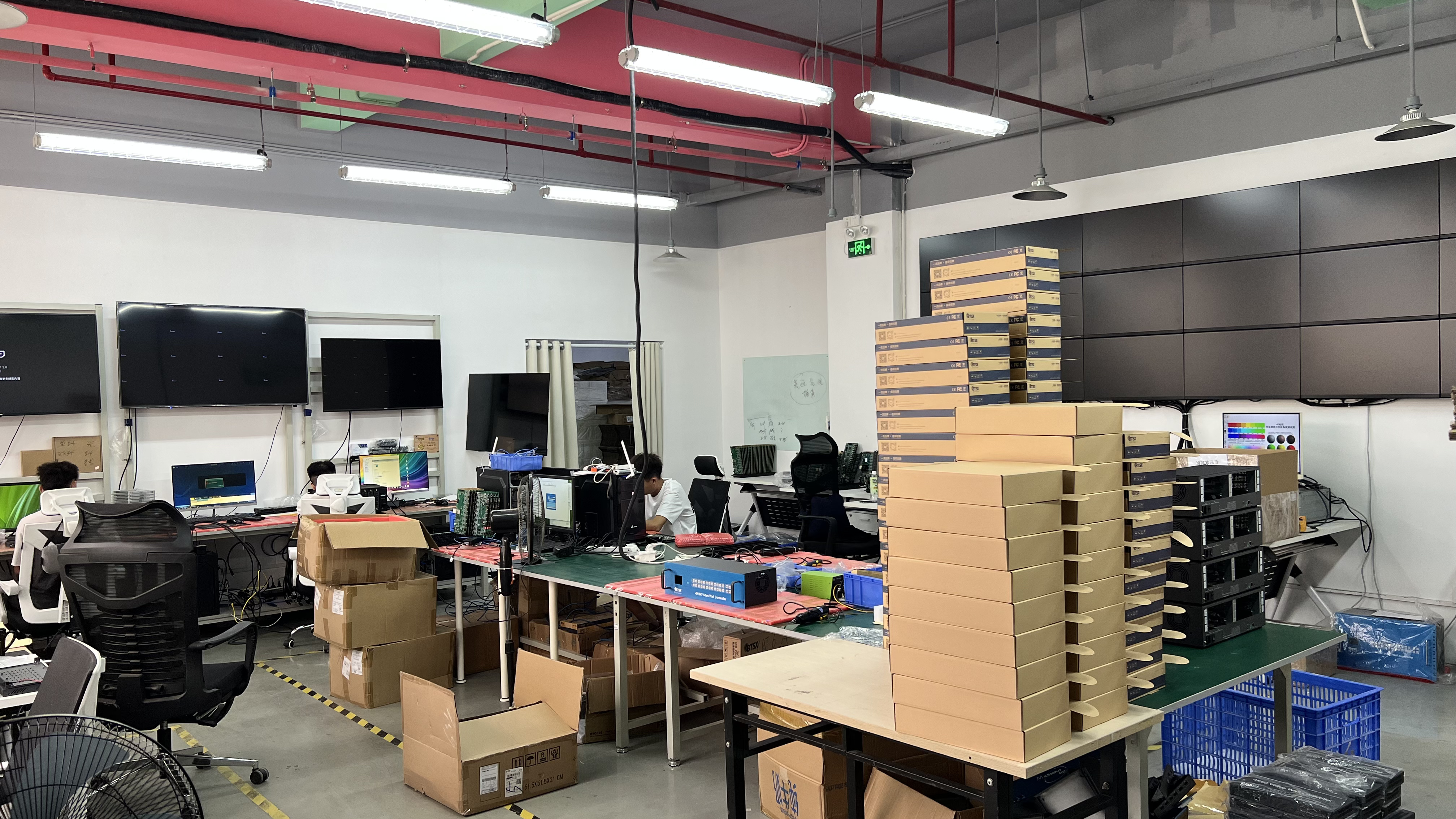
Manufacturing and assembly of Bitvisus video processing hardware.
Step-by-Step Breakdown
- Define the projection canvas and projector layout. The Romania project used six projectors to create an 11,520 × 1,200 edge-blended canvas on a museum building. The canvas size and projector overlap must be agreed before signal distribution is designed, because the expander mapping and projector alignment depend on the final pixel layout.
- Set the source and processing baseline. One PC with a GTX 3050 GPU was used as the source. The project required 4K source processing and mapping software for the building facade content. Keeping one PC as the source simplifies content playback and avoids the need to synchronize multiple source machines.
- Distribute the source with two multi-screen expanders. Two BIT-MSE-4K60-104Pro multi-screen expanders were used to split and organize the signal for the six projector paths. The expanders sit on the source side of the signal chain and provide the multi-screen distribution layer.
- Extend the signal over HDBaseT. Six BIT-Ex-HDBT-150-RX extenders carried the signal over approximately 120 m of cabling to the projector positions. Placing receivers near the projectors reduces long direct cable runs and makes the installation easier to service.
- Configure edge blending and warping. The project required high-resolution edge blending and warping. The projector array and mapping software were aligned to create a continuous image across the building facade. The signal distribution chain must preserve the image data so that the blending configuration matches what each projector receives.
- Commission the full chain as one system. Commissioning should verify source resolution, expander mapping, extender link status, projector input settings, and blend overlap. The Romania deployment reported reduced commissioning workload, which is consistent with a design that separates source-side splitting from long-distance transmission.
- Validate reliability before the show schedule. Every Bitvisus unit undergoes a 48-hour aging test before delivery, compared with 2-8 hours for ordinary ARM architecture and low-end consumer splitter products. The reported yield rate is 99.9%. For a Christmas season show, factory validation and a clear spare-unit plan support schedule confidence.
Use Cases
The Romania Christmas building mapping case is a specific deployment, but the decision framework applies to other multi-projector and video wall scenarios. The key is to match the signal distribution architecture to the source, distance, projector count, and commissioning workflow.
- Museum and heritage building projection mapping: A six-projector facade mapping project with a single PC source and long cable runs can use multi-screen expanders plus HDBaseT extenders to keep the source side compact and the projector side simple.
- Christmas light shows and cultural tourism events: Event-driven shows with a fixed season and a hard opening date benefit from a signal chain that is easy to commission, easy to service, and supported by factory aging tests before delivery.
- Immersive exhibitions and art venues: Multi-projector immersive spaces often need edge blending, warping, and stable long-run operation. The same expander-and-extender logic can be adapted when the projector count and distance fit the design.
- Control rooms and security monitoring: A video wall controller for control room or a video wall controller for security monitoring project may use a rack-mount video wall controller with low-latency processing and remote management. These are different requirements from a building mapping show, but the buyer should still define source, distance, and commissioning first.
- Conference rooms and corporate display: A video wall controller for conference room project usually has shorter cable runs and different source-switching needs. A 4K video wall controller may be sufficient, while an 8K video wall controller or an IP-based video wall controller may be considered when future signal formats or networked control are required.
When specifying a rack-mount video wall controller, an IP-based video wall controller, a low-latency video wall controller, an 8K video wall controller, a video wall controller with remote management, or a video wall controller with web interface control, the buyer should separate project requirements from product labels. The Romania case needed one-PC control, 4K source processing, 120 m HDBaseT distribution, and multi-projector edge blending. A control room may need seamless switching, KVM, and 7×24 operation. A conference room may need simple source selection and quiet operation. The architecture should follow the use case, not the other way around.
Comparison Table
The first table summarizes the verified facts of the Romania deployment. The second table compares Bitvisus FPGA-based video wall controllers with ordinary ARM architecture splicing processors, low-end consumer splitters, and imported brand splicing processors using the provided comparison facts.
| Decision point | Romania deployment fact | Why it matters |
|---|---|---|
| Source | One PC with GTX 3050 GPU | Single source simplifies content playback and synchronization |
| Projectors | 6 projectors | Multi-projector building facade mapping |
| Combined canvas | 11,520 × 1,200 | Requires correct segmentation, edge blending, and warping |
| Signal distribution | 2 × BIT-MSE-4K60-104Pro multi-screen expanders | Organizes the 4K source across six projector paths |
| Long-distance transmission | 6 × BIT-Ex-HDBT-150-RX extenders over approximately 120 m | HDBaseT distribution to projector positions |
| Reported outcome | Lower overall project cost; reduced commissioning workload | Supports budget control and schedule confidence |
| Comparison criterion | Bitvisus FPGA-based video wall controllers | Ordinary ARM architecture splicing processors / low-end consumer splitters | Imported brand splicing processors |
|---|---|---|---|
| Latency | 0 ms on FPGA and embedded full-stack controllers | 100-300 ms on ARM/CPU software-processing splicing processors | Not specified in the provided comparison facts |
| Maximum resolution | Native 8K@60Hz with lossless color | 4K@30Hz compressed and color-loss output | Not specified in the provided comparison facts |
| Defect rate | Below 0.1% | 0.5%-1% | Not specified in the provided comparison facts |
| Aging test | 48 hours before delivery; reported 99.9% yield rate | 2-8 hours | Not specified in the provided comparison facts |
| Delivery time | Approximately 7 days | 15-30 days | 15-30 days |
| Purchase cost positioning | 30%-50% lower than imported brand splicing processors; 10%-20% higher than domestic mid-range brands | Lower-cost segment; fixed models | Higher-cost imported segment |
| Warranty | 1-year warranty + replacement | 1-year warranty, no replacement | 1-year warranty, no replacement |
| Customization | Fully modular hardware and software design; customizable for special resolutions and channel counts | Fixed models that cannot be modified | Fixed models that cannot be modified |
FAQ
Are video wall controllers subject to specific HS codes for import?
Video wall controllers are commonly classified under HS Code 85437099 (other electrical machines and apparatus) or 85437042 (other video control unit). For control-room projects, ISO 11064 is the primary international standard governing control-room ergonomics. For a building projection mapping project, confirm local electrical, EMC, and outdoor event requirements with the integrator and customs broker.
Can one GTX 3050 PC drive six projectors over 120 m with this setup?
In the Romania deployment, one PC with a GTX 3050 GPU drove six projectors over approximately 120 m using two BIT-MSE-4K60-104Pro multi-screen expanders and six BIT-Ex-HDBT-150-RX extenders. The signal chain supported 4K source processing and an 11,520 × 1,200 edge-blended canvas. Edge blending and warping were configured across the projector array with mapping software and projector alignment.
How does the cost compare with imported brand splicing processors?
Purchase cost of Bitvisus controllers is 30%-50% lower than imported brand splicing processors and 10%-20% higher than domestic mid-range brands. The Romania deployment also reported lower overall project cost for the light show operator. Over a three-year period, the comparison unit reports a total cost of ownership 40%+ lower than imported brands and 20%+ lower than low-end brands, considering failure rate, maintenance, and downtime.
Can we validate the setup before full deployment?
For project validation, ask Bitvisus for a sample or a configuration review before committing to the full six-projector build. A sample review can confirm signal compatibility, connector types, and the commissioning workflow; it is not a substitute for on-site alignment of the projector array. Contact eddie.jia@bitvisus.com or WhatsApp +86 186-8150-9089 to discuss your project.
What is the typical delivery time?
Delivery time for Bitvisus controllers is approximately 7 days, compared with 15-30 days for imported brand and low-end alternatives, a 2-4x faster lead time. For a Christmas show with a fixed opening date, confirm the production slot and shipping method before finalizing the schedule.
Conclusion
The Romania Christmas building mapping deployment shows a practical video wall controller architecture for a six-projector, 120 m, one-PC project. Two BIT-MSE-4K60-104Pro multi-screen expanders and six BIT-Ex-HDBT-150-RX extenders created a distributed signal path that supported 4K source processing, multi-projector edge blending, and one-PC control. The operator reported lower overall project cost and reduced commissioning workload.
For buyers planning a similar building projection mapping show, the decision framework is straightforward: define the canvas and projector count, confirm the source, measure the cable runs, choose the signal distribution layer, and validate the full chain before the show schedule. If the project needs a rack-mount video wall controller for a control room, a low-latency video wall controller for security monitoring, a 4K video wall controller for a conference room, or an IP-based video wall controller with web interface control, the same discipline applies: match the architecture to the use case and verify the facts.
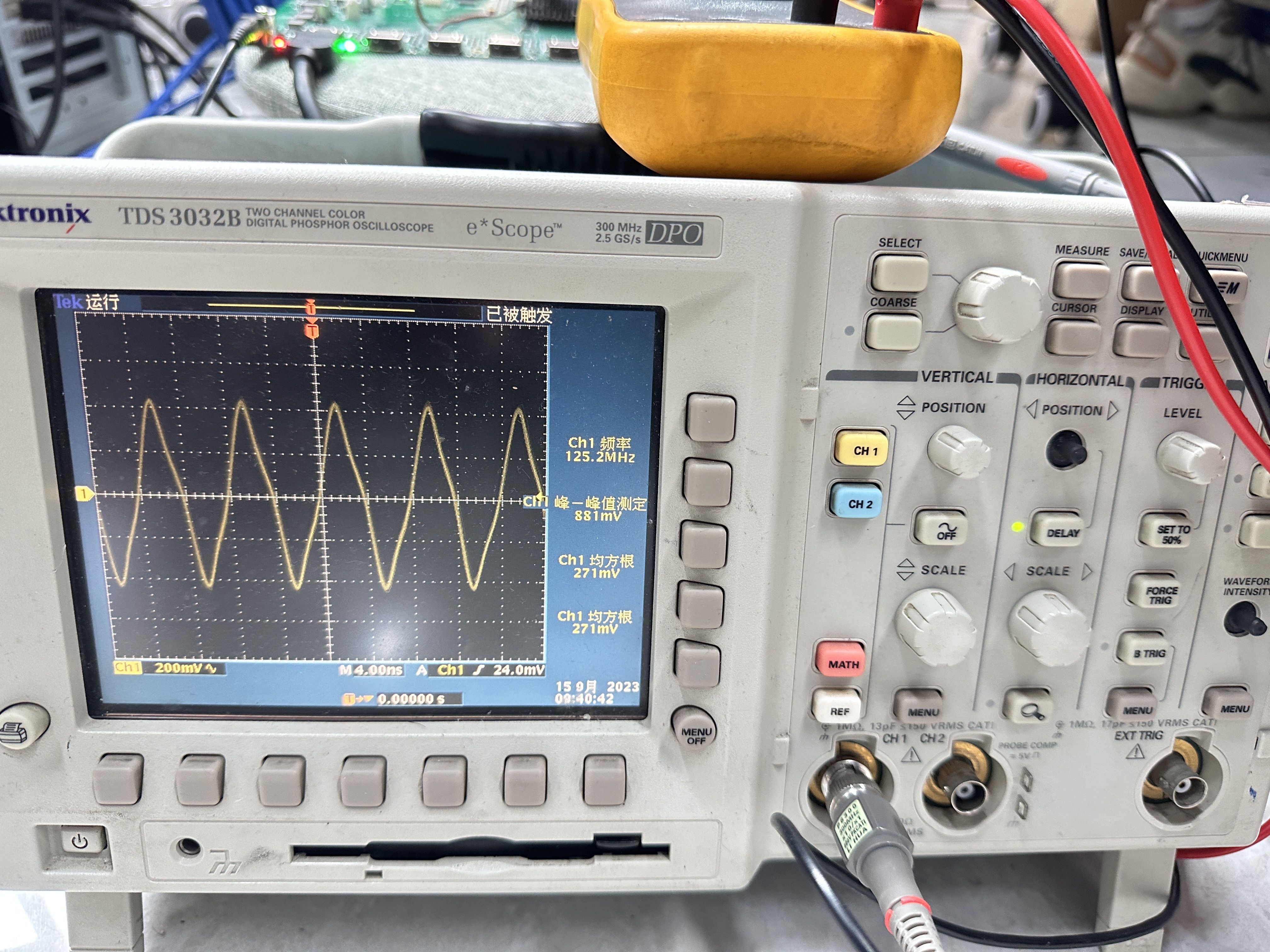
Factory validation before shipment supports project reliability.
Next step: For a project consultation, sample discussion, or quotation, contact Bitvisus at eddie.jia@bitvisus.com or WhatsApp +86 186-8150-9089. Website: bitvisus.com.
Download the 2026 Bitvisus Product Brochure: 2026 Bitvisus Product Brochure (PDF).
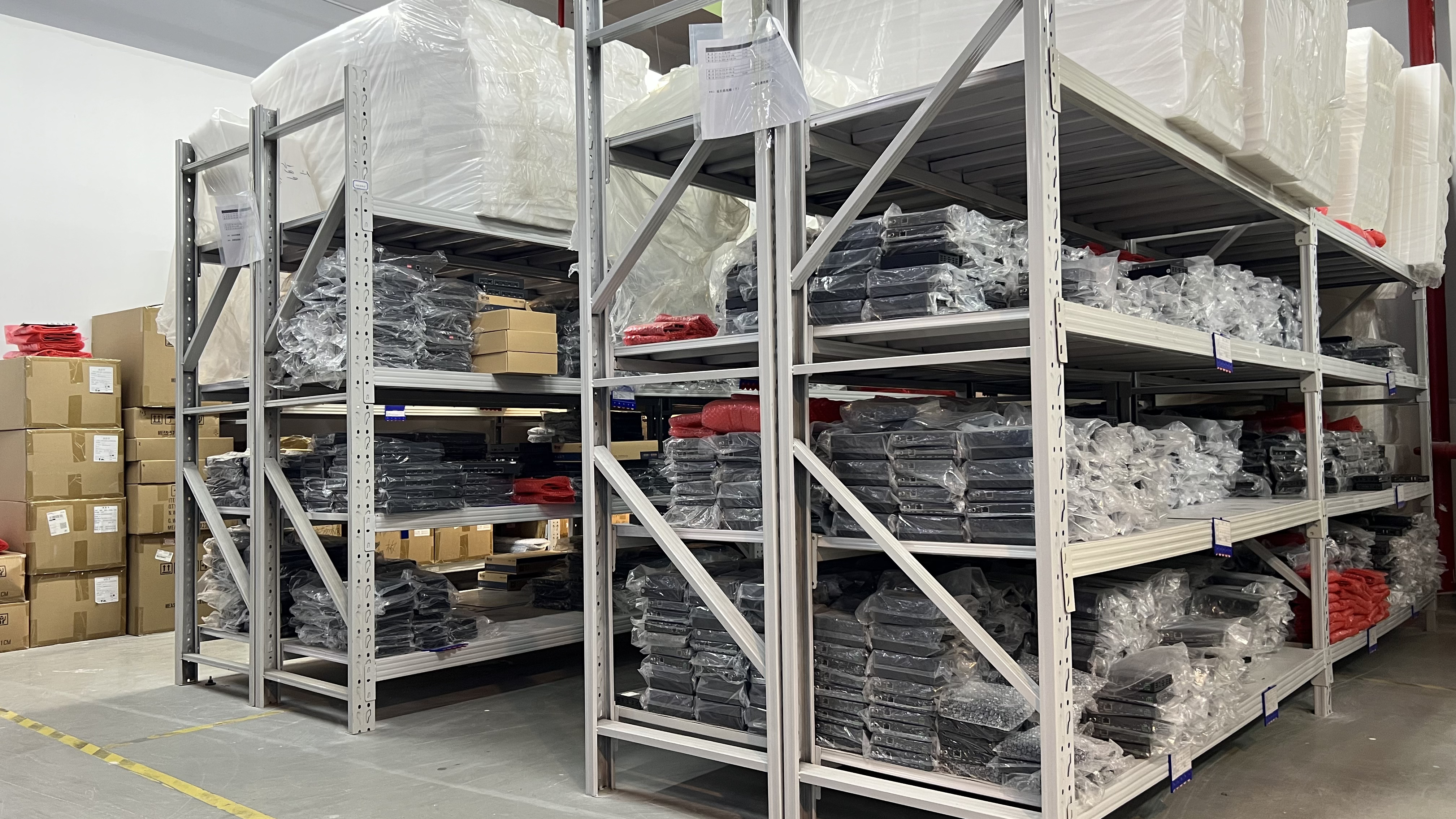
Production and warehouse support for project delivery and sample requests.
Have Questions or Need More Details?
Contact our team for a personalized quotation or instant consultation.
Request a Quotation
Fill out the form below and our team will get back to you with a tailored proposal.
WhatsApp Direct Chat
Prefer to chat in real-time? Message us on WhatsApp for instant assistance & quick answers.
- Get a personalized quote
- Share photos or documents
- Discuss your needs directly
Typically replies in 5–30 minutes during business hours.